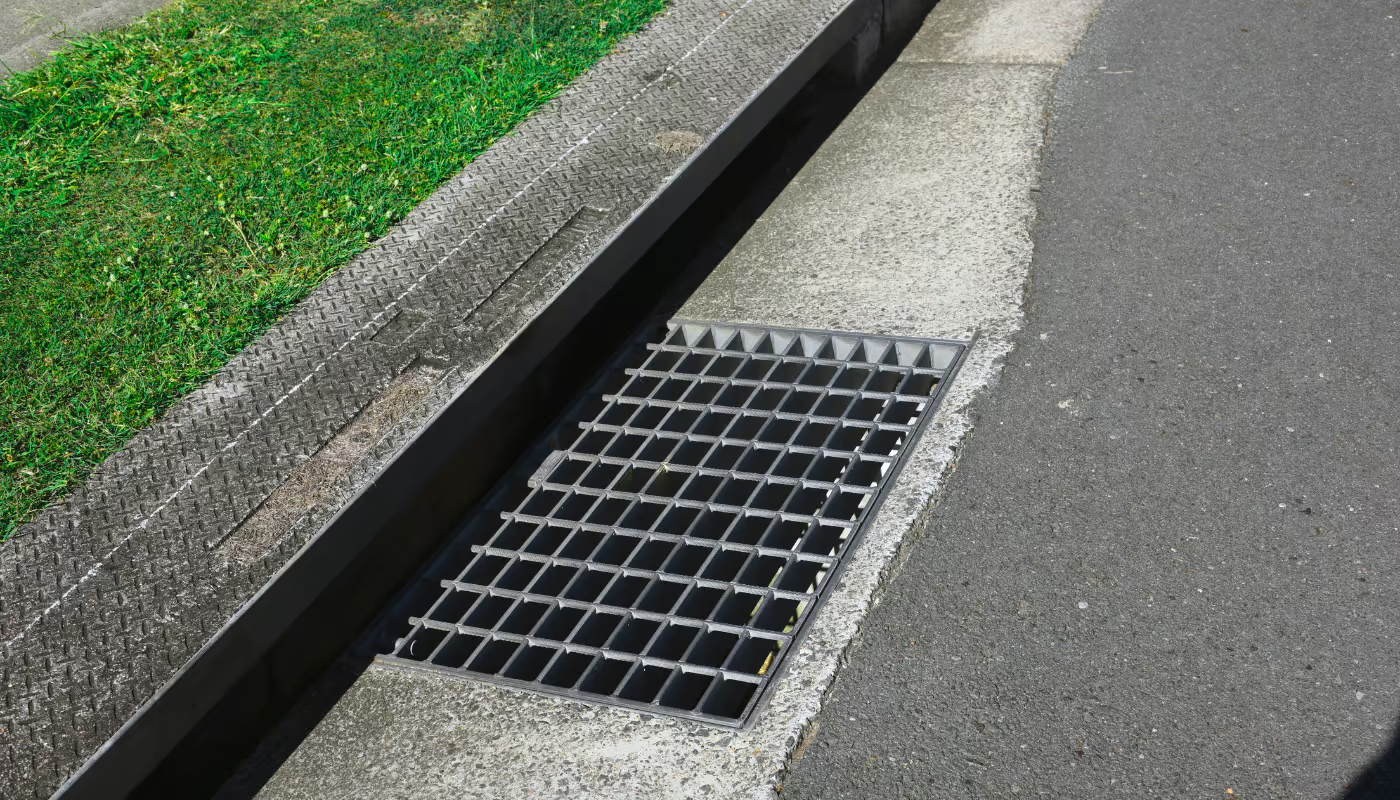
Six Mistakes Civil Contractors Make When Selecting Drainage Grates
Drainage and stormwater systems are critical infrastructure for managing stormwater run off. When installing the necessary infrastructure, there are six common mistakes that occur when it comes to selecting the right type of drainage grates for the application.
- Ignoring the location and application
When a new infrastructure project appears on the tenders list, it is essential to understand what the project involves and what type of traffic load will be utilising the end construction before proceeding with work. Without knowing this information upfront, it is easy to get the required specifications wrong.
A grate suitable for a quiet pedestrian footpath is very different from one required on a busy commercial loading dock. Factors such as whether the area is near the coast should also be considered, as they may require corrosion-resistant materials or whether it will be exposed to chemicals or heavy machinery and if it is in a public space with accessibility requirements. All of these must be assessed at the outset of the project.
Taking the time to properly understand the location and application ensures every other specification decision flows from a solid foundation.
- Selecting the incorrect load rating and weight capacity
Drainage grates are manufactured for various load ratings and weight capacities. Selecting the right product with the correct load rating is critical for the longevity of the infrastructure. If you get it wrong, it can be dangerous and expensive.
The danger zone occurs when you choose a grate that is under specification. If this happens, the grate could bow or bend initially and eventually fracture and collapse under the weight of a heavy load; causing damage to vehicles, people, and potentially the structures beneath the grate.
To avoid this, it is important to understand what load ratings are suitable for the different weight capacities:
| Class | Design load | Wheel load | Suitable application |
|---|---|---|---|
| Class A | 10 kN | 330 kg | Areas including footways, accessible only to pedestrians and pedal cyclists, closed to other traffic. |
| Class B | 80 kN | 2,670 kg | Areas including footways and light tractor paths, accessible to vehicles excluding commercial vehicles or livestock. |
| Class C | 150 kN | 5,000 kg | Malls and areas open to slow-moving commercial vehicles. |
| Class D | 240 kN | 8,000 kg | Carriageways or roads and commercial vehicles. |
| Class E | 400 kN | 13,700 kg | General docks and aircraft pavements. |
| Class F | 600 kN | 20,000 kg | Docks and aircraft pavements subject to high wheel loads. |
| Class G | 900 kN | 30,000 kg | Docks and aircraft pavements subject to very high wheel loads. |
When in doubt, always choose a grate with a higher load rating or weight capacity than required. The cost difference between grates with varying load classes is minor compared to the liability and rectification costs of a failed grate.
- Overlooking grate design and water flow capacity
A grate’s primary function is to allow water to pass through efficiently. One of the most common and costly mistakes is selecting a grate based solely on structural load requirements while overlooking hydraulic performance.
The open area ratio is the percentage of a grate’s surface that is open to allow water to flow directly into the drainage system. A grate with an insufficient open area can cause localised flooding, surface ponding, and downstream system overload during heavy rainfall events.
When assessing a grate’s water flow capacity, the open area ratio must be matched to the hydraulic demands of the site; specifically, the size of the catchment area and the design storm intensity determined by the hydraulic engineer.
Real-world conditions also matter; in areas with vegetation, construction activity, or heavy foot traffic, debris and sediment can rapidly reduce the effective open area, making regular maintenance essential.
Lastly, even a grate with excellent flow capacity will underperform if the pit or channel beneath it is undersized. The inlet and the structure it sits on must be hydraulically matched.
- Neglecting accessibility and safety
Drainage grates in public spaces must comply with Australian Standards and accessibility guidelines; yet this is a step that is frequently overlooked until it is too late, resulting in costly replacements.
The key accessibility and safety considerations that civil contractors should be aware of include:
- Gap width: AS 3996 specifies maximum gap widths to prevent hazards for pedestrians, wheelchair users, and cyclists. Gaps that are too wide can trap bicycle tyres, walking aids, and high heels, creating significant injury risk and liability exposure.
- Anti-slip surface: In pedestrian areas, grates must provide adequate slip resistance, particularly when wet. Look for grates with a textured or ribbed surface finish that meets the required slip resistance classification.
- Flush installation: Grates that sit above or below the surrounding surface create trip hazards. Specifying the correct frame height and ensuring accurate installation prevents dangerous level differences.
- Failing to consider the broader stormwater management system
A drainage grate does not operate in isolation; it is one component in a broader stormwater management system. Selecting a grate without considering how it integrates with the overall system design is a mistake that can undermine the performance of the entire network.
Important stormwater management considerations to be aware of are:
- System capacity: The grate must be matched to the pit or channel it sits on, which in turn must be sized for the total catchment area. A high-flow grate on an undersized pit provides no benefit.
- Maintenance access: Grates that are difficult to remove or require specialised equipment to lift create ongoing maintenance headaches for asset owners. Specifying grates with locking mechanisms, lift-out designs, or hinged frames makes routine inspection and cleaning far more manageable.
- Future upgrades: Where a road or precinct may be upgraded in the future, specifying a higher load class from the outset can avoid costly replacements down the track.
- Ensuring compliance with AS 3996-2019
It is crucial that the drainage grates you purchase comply with Australian Standards, and one of the simplest mistakes that is made by the Civil Contractor is not confirming the compliance of these products with the supplier.
As outlined throughout the article, drainage grates are not only responsible for the drainage on roads, but function as a safety barrier for substantial and repetitive loads, protecting both vehicles and pedestrians, each day.
Unfortunately, AS3996-2019 Access Covers and Grates is poorly regulated and is left to the road authorities, councils and other asset owners to ensure the drainage products are compliant or not, indicating the important role that the contractor plays in choosing a grate which complies with the standard.
Thinking about the drainage grate as part of a system, rather than a standalone product will lead to a better outcome for the project, the asset owner, and the community.
Selecting the right drainage grate is not a decision to be made at the last minute or left to whoever is available to place the order. Taking a systematic approach, including assessing location and application, confirming load ratings, checking accessibility compliance, and considering the stormwater system as a whole; will result in infrastructure that performs as designed and stands the test of time.
For expert advice on selecting the right drainage grate for your project, reach out to the Civilcast team.
1300 012 278 | sales@civilcast.com.au | www.civilcast.com.a
